
如果你的目标是通过 RIBO Level 1,那么 Ontario Automobile Policy (OAP 1) 不需要逐字背诵,而是要掌握考试最常考的内容。自2024年开始,RIBO考试提供 OAP1 PDF 作为开卷资料,但真正考试时间很紧,不可能临场查阅,所以必须熟悉结构。
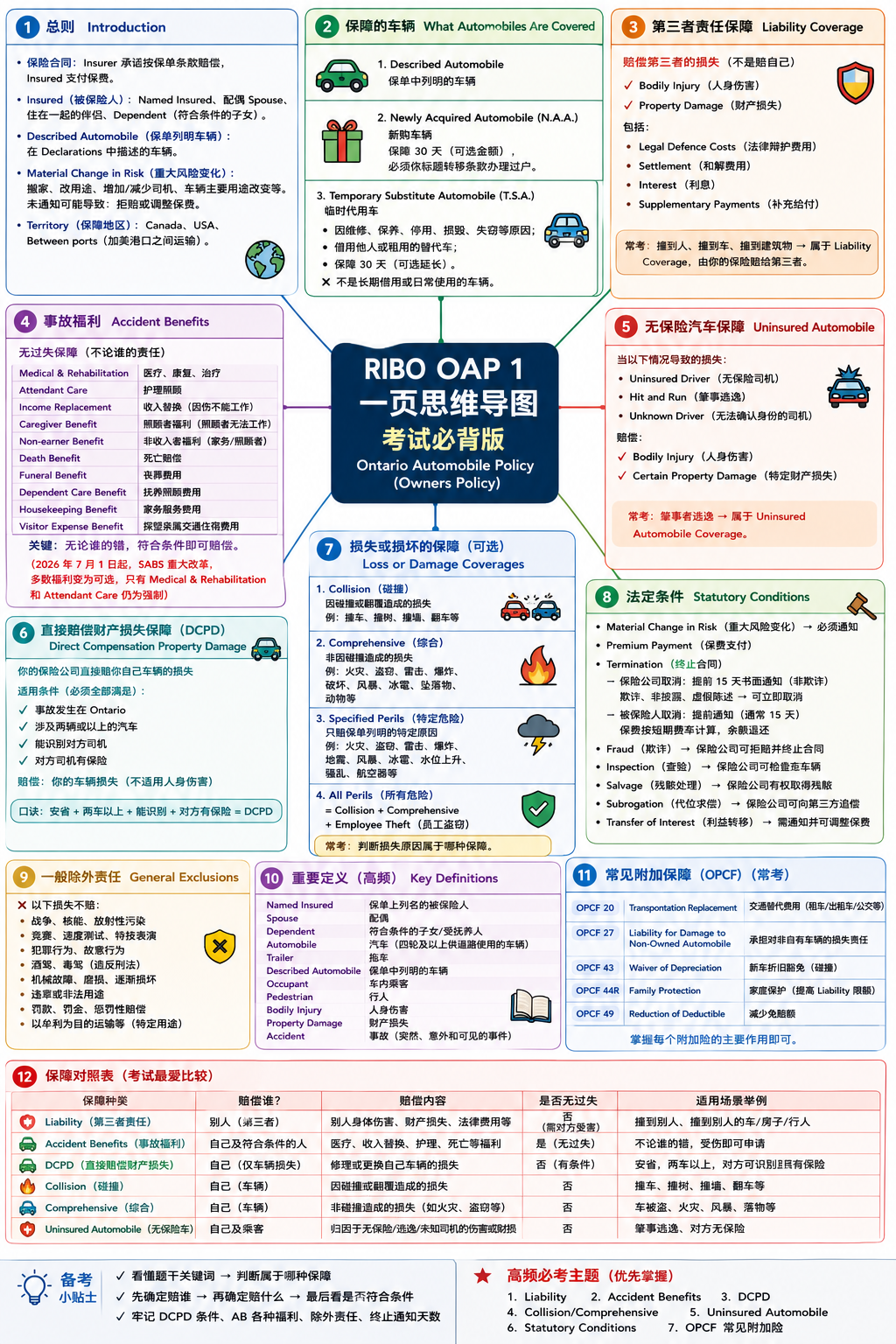
RIBO 必须掌握的 OAP 1 知识(★★★★★)
Section 1 – Introduction(总则)★★★★★
考试重点:
- 什么是保险合同
- Insured(被保险人)
- Described Automobile(保单列明车辆)
- Material Change in Risk(重大风险变化)
- Territory(保障地区)
- Canada
- USA
- Between ports(加拿大与美国港口之间运输)
常考:
如果搬家、改用途、增加司机,没有通知保险公司,会怎样?
答案:
Material Change → 保险公司可拒赔或调整保费。
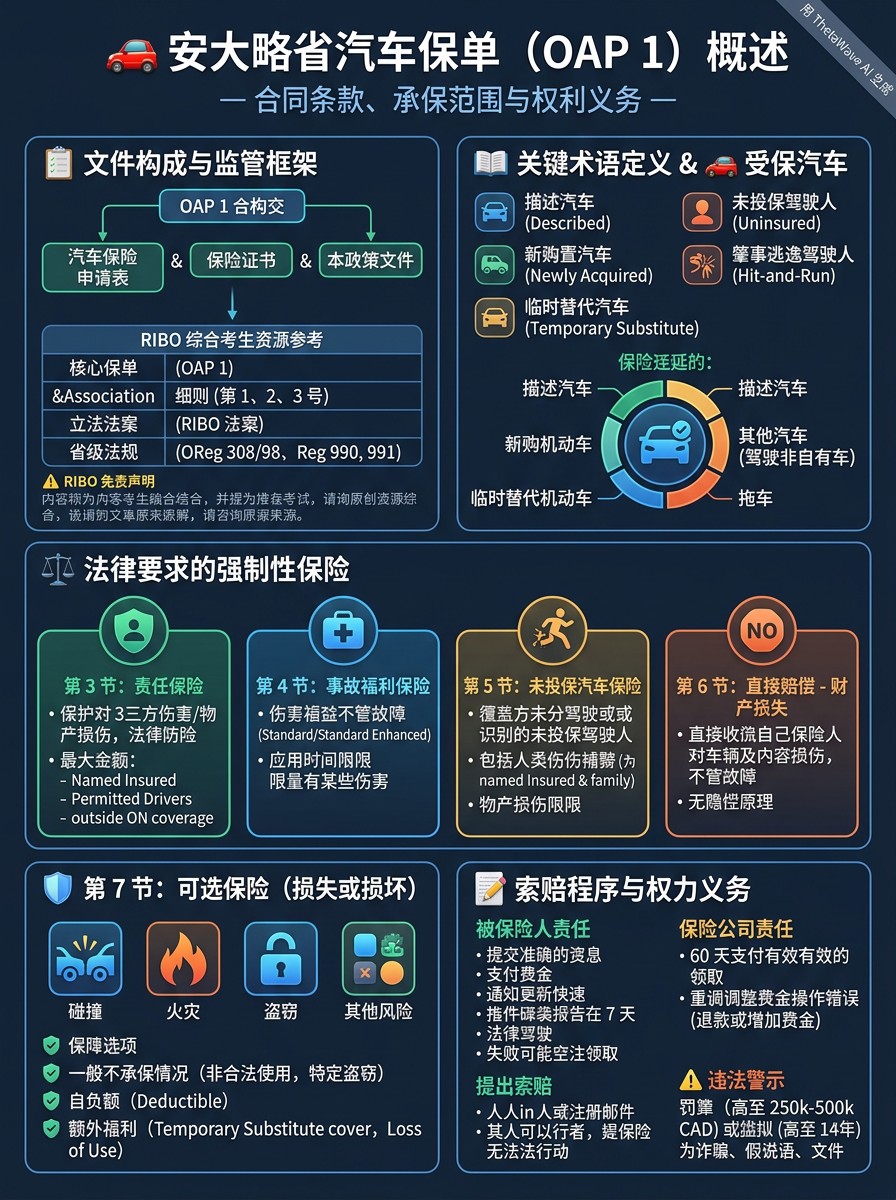
Section 2 – What Automobiles Are Covered★★★★★
必须知道:
Covered Automobile 包括:
- Described Automobile
- Newly Acquired Automobile
- Temporary Substitute Automobile
考试非常喜欢:
Temporary Substitute Automobile
例如:
你的车维修中
借朋友车
是否有保障?
答案:
✔ 有(满足条件)
但不是永久借车。
Section 3 – Liability Coverage★★★★★
这是最重要的一章。
必须会:
Third Party Liability
赔别人
不是赔自己。
包括:
✔ Bodily Injury
✔ Property Damage
考试喜欢问:
谁赔?
例如:
撞别人车
撞别人房子
撞到行人
都是:
Third Party Liability
还要知道:
Legal Defence Costs
Settlement
Interest
Supplementary Payments
Section 4 – Accident Benefits★★★★★
这是 RIBO 超高频。
必须知道:
Medical
Rehabilitation
Attendant Care
Income Replacement
Caregiver
Non-earner
Death Benefit
Funeral Benefit
Dependent Care
Housekeeping
Visitor Expenses
考试喜欢:
Which benefit applies?
例如:
不能工作
→ Income Replacement
需要照顾
→ Attendant Care
死亡
→ Death Benefit
注意:
自 2026 年 7 月 1 日起,安大略省事故福利(SABS)发生重大改革,许多原本强制的福利改为可选,仅医疗康复(Medical & Rehabilitation)和护理(Attendant Care)仍为强制保障。因此如果参加改革后的 RIBO 考试,需要特别留意新版规则。
Section 5 – Uninsured Automobile★★★★★
非常爱考。
包括:
Uninsured Driver
Hit and Run
Unknown Driver
赔什么?
自己的:
✔ Bodily Injury
✔ Certain Property Damage
考试:
Someone hits you and flees.
答案:
Uninsured Automobile Coverage
Section 6 – DCPD(★★★★★)
RIBO 最喜欢考之一。
Direct Compensation Property Damage
要牢记:
适用条件:
✔ Ontario
✔ Two or more automobiles
✔ Other driver identified
✔ Other driver insured
赔:
自己的车
不是别人赔你
而是:
自己的保险公司赔你。
考试几乎每年都有。
Section 7 – Loss or Damage Coverages★★★★★
一定会考。
四种:
Collision
撞车
撞树
撞墙
翻车
Comprehensive
不是碰撞造成。
例如:
Fire
Theft
Lightning
Explosion
Vandalism
Windstorm
Falling Object
Animal
Specified Perils
只有指定几项:
Fire
Theft
Lightning
Explosion
Earthquake
Windstorm
Hail
Rising Water
Riot
Aircraft
All Perils
=
- Collision
- Comprehensive
- Employee Theft
考试最爱:
Which coverage pays?
Section 8 – Statutory Conditions★★★★★
超级重要。
尤其:
Material Change
Termination
Fraud
Inspection
Salvage
Subrogation
考试喜欢:
Insured commits fraud.
结果?
整个 claim 可被拒。
Termination
必须知道:
Insurer Cancellation
Insured Cancellation
Notice Days
Premium Refund
General Exclusions★★★★★
一定会考。
例如:
War
Nuclear
Racing
Criminal Acts
Intentional Damage
Wear and Tear
Mechanical Breakdown
OAP 1 常见 Definitions★★★★
要知道:
Named Insured
Spouse
Dependent
Automobile
Trailer
Described Automobile
Occupant
Pedestrian
Additional Benefits★★★★
例如:
Temporary Substitute Automobile
Newly Acquired Automobile
Transportation Replacement
Legal Costs
Combined Coverage★★★★★
考试喜欢比较:
| Coverage | 赔谁 |
|---|---|
| Liability | 别人 |
| Accident Benefits | 自己 |
| DCPD | 自己车 |
| Collision | 自己车(碰撞) |
| Comprehensive | 自己车(非碰撞) |
| Uninsured | 无保险司机造成的损失 |
这是 RIBO 最容易考案例题的知识点。
OPCF(★★★★★)
考试一定考几题。
至少知道:
- OPCF 20(Transportation Replacement)
- OPCF 27(Liability for Damage to Non-Owned Automobile)
- OPCF 43(Waiver of Depreciation)
- OPCF 44R(Family Protection)
- OPCF 49(Reduction of Deductible)
不用背全部条文,但要知道每个附加险的主要作用。
RIBO OAP1 高频考点(按重要程度)
⭐⭐⭐⭐⭐(必考)
- Liability
- Accident Benefits
- DCPD
- Collision vs Comprehensive
- Uninsured Automobile
- Statutory Conditions
- Newly Acquired Auto
- Temporary Substitute Auto
- OPCF 常见附加险
⭐⭐⭐⭐
- Definitions
- Exclusions
- Territory
- Material Change in Risk
- Cancellation
⭐⭐⭐
- Supplementary Payments
- Salvage
- Inspection
- Premium Adjustment
建议的复习顺序(效率最高)
如果你距离考试时间不多,建议按下面顺序学习:
- Liability(第三者责任)
- Accident Benefits(事故福利)
- DCPD
- Collision / Comprehensive / All Perils
- Uninsured Automobile
- Statutory Conditions
- OPCF 常见附加险
- Definitions & Exclusions
RIBO OAP 1 模拟测试(第一套)
第一部分:Liability(第三者责任)
1.
Tom accidentally runs a red light and hits another vehicle. The other driver suffers injuries and their vehicle is badly damaged.
Which coverage under Tom’s OAP 1 would respond?
A. Collision Coverage
B. Accident Benefits
C. Third Party Liability
D. Comprehensive Coverage
2.
After the accident above, Tom also suffers injuries himself.
Which section of his own policy pays for his medical expenses regardless of fault?
A. Collision
B. Accident Benefits
C. Third Party Liability
D. DCPD
第二部分:DCPD
3.
Sarah is stopped at a red light in Ontario when another identified Ontario driver rear-ends her.
Who pays for Sarah’s vehicle damage?
A. The at-fault driver’s insurer
B. Sarah’s own insurer under DCPD
C. Sarah herself
D. Accident Benefits
4.
Which ONE of the following is NOT required for DCPD to apply?
A. The accident occurs in Ontario.
B. Another vehicle is involved.
C. The other driver is identifiable.
D. You are injured in the accident.
第三部分:Collision vs Comprehensive
5.
A large tree falls onto Mike’s parked vehicle during a windstorm.
Which coverage would normally apply?
A. Collision
B. Comprehensive
C. DCPD
D. Liability
6.
Jenny backs into a concrete pole while parking.
Which coverage applies?
A. Comprehensive
B. Collision
C. Liability
D. Uninsured Automobile
第四部分:Temporary Substitute Automobile
7.
David’s insured vehicle is in the repair shop after an insured loss. He borrows his neighbour’s vehicle for three days.
Under OAP 1, the borrowed vehicle is most likely considered:
A. Newly Acquired Automobile
B. Temporary Substitute Automobile
C. Described Automobile
D. Uninsured Automobile
第五部分:Uninsured Automobile
8.
An uninsured driver runs a stop sign and crashes into Emma’s vehicle.
Which coverage may compensate Emma?
A. Comprehensive
B. Collision only
C. Uninsured Automobile Coverage
D. OPCF 43
9.
A hit-and-run driver damages your vehicle and cannot be identified.
Which coverage is MOST likely to respond?
A. Third Party Liability
B. Uninsured Automobile
C. Collision
D. DCPD
第六部分:Statutory Conditions
10.
An insured intentionally lies about how an accident occurred in order to obtain payment.
What is the likely consequence?
A. The insurer must still pay.
B. Only half of the claim is paid.
C. The insurer may deny the claim because of fraud.
D. Only the deductible increases.
11.
Which situation is considered a Material Change in Risk?
A. Washing the car every weekend.
B. Moving to another city without informing the insurer.
C. Filling the gas tank.
D. Rotating the tires.
第七部分:OPCF
12.
Which OPCF endorsement waives depreciation for a qualifying new vehicle?
A. OPCF 20
B. OPCF 27
C. OPCF 43
D. OPCF 44R
13.
Which OPCF provides Family Protection Coverage?
A. OPCF 44R
B. OPCF 20
C. OPCF 43
D. OPCF 27
第八部分:综合案例(考试最爱)
14.
Kevin is driving in Ontario when another identified driver runs a stop sign and hits his vehicle.
Kevin suffers a broken arm, and his car is damaged.
Which combination of coverages applies?
A. Liability + Collision
B. Accident Benefits + DCPD
C. Comprehensive + Liability
D. Collision + Uninsured Automobile
15.
Lisa accidentally backs into her own garage door, damaging both her vehicle and the garage.
Which coverage pays for the damage to Lisa’s own vehicle?
A. Liability
B. Comprehensive
C. Collision
D. Accident Benefits
难度升级(★★★★★)
16.
Which ONE of the following losses is covered under Comprehensive Coverage?
A. Collision with another vehicle
B. Theft of the automobile
C. Hitting a concrete barrier
D. Damage caused by careless parking
17.
An insured purchases a replacement vehicle.
What must the insured do to ensure it remains covered beyond the automatic coverage period?
A. Nothing.
B. Notify the insurer within the required period.
C. Buy OPCF 27.
D. Purchase Collision Coverage.
18.
Which coverage pays for damage you cause to another person’s vehicle?
A. Collision
B. DCPD
C. Third Party Liability
D. Comprehensive
19.
Which coverage is no-fault?
A. Liability
B. Accident Benefits
C. Collision
D. Comprehensive
20.
Which statement about DCPD is TRUE?
A. It pays for injuries.
B. It pays for damage to your own automobile when the required conditions are met.
C. It pays only when you are at fault.
D. It replaces Collision Coverage in every situation.
评分标准
- 18–20 分:RIBO OAP 1 已掌握得很好。
- 15–17 分:通过考试机会较高,再加强案例题即可。
- 12–14 分:基础不错,但还需要巩固高频考点。
- 11 分及以下:建议重点复习 Liability、Accident Benefits、DCPD、Collision vs Comprehensive。
你还需要加强的知识点
建议重点复习以下两个口诀:
口诀一:Collision vs Comprehensive
Collision = Hit something(碰撞)
- 撞车
- 撞树
- 撞墙
- 撞柱子
- 翻车
Comprehensive = Something hits you / 非碰撞
- Fire
- Theft
- Hail
- Wind
- Falling object
- Vandalism
口诀二:赔谁?
这是 RIBO 最爱考的概念。
| Coverage | 赔谁? |
|---|---|
| Liability | 别人(Third Party) |
| Accident Benefits | 自己(医疗、收入等) |
| DCPD | 自己的车(符合条件时) |
| Collision | 自己的车(碰撞) |
| Comprehensive | 自己的车(非碰撞) |
| Uninsured Automobile | 自己(被无保险或肇事逃逸司机造成损失时 |
一个考试万能表(一定背)
| 情况 | Coverage |
|---|---|
| 撞别人车 | Third Party Liability |
| 自己车撞墙 | Collision |
| 自己撞树 | Collision |
| 自己翻车 | Collision |
| 树倒砸车 | Comprehensive |
| 火灾 | Comprehensive |
| 偷车 | Comprehensive |
| 冰雹 | Comprehensive |
| 飞石(多数情况) | Comprehensive |
| Hit & Run | Uninsured Automobile |
| 自己受伤 | Accident Benefits |
| 对方受伤 | Liability |
| 自己车(符合 DCPD 条件) | DCPD |
| 撞鹿、撞熊、撞动物 |
| Comprehensive ✅ |
第 21 题
John accidentally hits a deer while driving.
Which coverage normally applies?
A. Collision
B. Comprehensive
C. Liability
D. DCPD
第 22 题
Your parked vehicle is stolen from a shopping mall.
A. Collision
B. Comprehensive
C. Liability
D. DCPD
第 23 题
You hit another driver’s vehicle and both vehicles are damaged.
Which coverage pays for the other driver’s vehicle?
A. Collision
B. Liability
C. DCPD
D. Comprehensive
第 24 题(经典陷阱)
Your vehicle slides on ice and hits a guardrail.
Which coverage pays for your vehicle?
A. Comprehensive
B. Collision
C. Liability
D. DCPD
很多人看到 ice(冰) 会误选 Comprehensive,但真正原因是车辆发生了碰撞,因此属于 Collision。
第 25 题(RIBO 高频)
A rock falls from a cliff and lands on your parked automobile.
Which coverage applies?
A. Collision
B. Comprehensive
C. DCPD
D. Liability
RIBO 考试口诀(建议背下来)
Liability = Pay Others(赔别人)
Accident Benefits = Pay You(赔你的人)
Collision / Comprehensive / DCPD = Pay Your Vehicle(赔你的车)
RIBO OAP 1 真题风格模拟(20题)
1. Third Party Liability
David accidentally hits a cyclist. The cyclist is injured, and David’s own vehicle is also damaged.
Which coverage pays for the cyclist’s medical expenses?
A. Collision
B. Accident Benefits
C. Third Party Liability
D. DCPD
2. Accident Benefits
Maria is at fault in an automobile accident and suffers a broken leg.
Which statement is TRUE?
A. She cannot receive any benefits because she caused the accident.
B. Her medical expenses may be covered under Accident Benefits.
C. Her injuries are covered by Third Party Liability.
D. Her vehicle repairs are covered by Accident Benefits.
3. DCPD
Which situation qualifies for DCPD?
A. Your vehicle is stolen.
B. You strike a deer.
C. Another identified insured driver rear-ends you in Ontario.
D. You hit a parked vehicle.
4. Collision vs Comprehensive
Your parked automobile is damaged by hail.
Which coverage applies?
A. Collision
B. Comprehensive
C. Liability
D. DCPD
5. Collision
While avoiding a squirrel, you swerve and hit a telephone pole.
Which coverage pays for your vehicle?
A. Comprehensive
B. Collision
C. Liability
D. Uninsured Automobile
注意:不要被 “squirrel”(松鼠)误导。
6. Comprehensive
Which loss is MOST likely covered under Comprehensive?
A. Backing into a garage wall.
B. Collision with another vehicle.
C. Theft of the insured automobile.
D. Sliding into a guardrail.
7. Temporary Substitute Automobile
Your insured vehicle is being repaired after a covered loss. You borrow your sister’s car for two days.
The borrowed vehicle is MOST likely:
A. A newly acquired automobile.
B. A temporary substitute automobile.
C. An uninsured automobile.
D. Not covered.
8. Newly Acquired Automobile
After purchasing another vehicle, an insured should:
A. Wait until renewal to report it.
B. Notify the insurer within the required time.
C. Purchase OPCF 44R.
D. Cancel the original policy.
9. Material Change in Risk
Which situation is MOST likely a material change in risk?
A. Installing winter tires.
B. Moving to another city.
C. Washing the vehicle weekly.
D. Filling the gas tank.
10. Fraud
An insured intentionally exaggerates the value of stolen property.
What is the MOST likely consequence?
A. The insurer pays half.
B. Only the excess amount is denied.
C. The insurer may deny the claim because of fraud.
D. Nothing happens.
11. Uninsured Automobile
A hit-and-run driver cannot be identified.
Which coverage is MOST likely available?
A. DCPD
B. Liability
C. Uninsured Automobile
D. Collision
12. Liability
You accidentally damage your neighbour’s fence while reversing.
Which coverage responds?
A. Collision
B. Comprehensive
C. Third Party Liability
D. Accident Benefits
13. Accident Benefits
Which benefit is payable regardless of fault?
A. Collision
B. Income Replacement Benefit
C. Third Party Liability
D. Comprehensive
14. OPCF
Which endorsement waives depreciation on qualifying new vehicles?
A. OPCF 20
B. OPCF 27
C. OPCF 43
D. OPCF 44R
15. OPCF
Which endorsement increases protection if an at-fault driver has insufficient liability insurance?
A. OPCF 20
B. OPCF 27
C. OPCF 43
D. OPCF 44R
16. Comprehensive Trap
A large tree falls onto your parked automobile during a windstorm.
Which coverage applies?
A. Collision
B. Comprehensive
C. DCPD
D. Liability
17. Collision Trap
Your vehicle skids on ice and strikes another automobile.
Which coverage pays for your own vehicle (assuming you purchased it)?
A. Comprehensive
B. Collision
C. Liability
D. Accident Benefits
18. Liability vs Accident Benefits
You injure another driver and also injure yourself.
Which combination is correct?
A. Your injuries → Liability; Other driver’s injuries → Accident Benefits
B. Your injuries → Accident Benefits; Other driver’s injuries → Liability
C. Both injuries → Liability
D. Both injuries → Accident Benefits
19. Mixed Coverage
Another insured Ontario driver is 100% at fault and damages your vehicle.
Which coverage generally pays for your vehicle damage?
A. Collision
B. DCPD
C. Liability
D. Comprehensive
20. 综合案例(★★★★★)
Kevin is driving in Ontario. Another identified insured driver runs a red light and hits Kevin’s car.
Kevin suffers injuries, and his vehicle is damaged.
Which answer BEST describes the coverages?
A. Kevin’s injuries → Liability; Kevin’s vehicle → Collision
B. Kevin’s injuries → Accident Benefits; Kevin’s vehicle → DCPD
C. Kevin’s injuries → Comprehensive; Kevin’s vehicle → Liability
D. Kevin’s injuries → DCPD; Kevin’s vehicle → Accident Benefits
评分标准
- 19–20 分:RIBO OAP 1 已达到优秀水平,案例题能力很强。
- 17–18 分:通过考试把握较大,只需巩固少数易混点。
- 15–16 分:基础扎实,但还要加强陷阱题训练。
- 14 分及以下:建议重点复习 Liability、Accident Benefits、DCPD、Collision vs. Comprehensive。
这套题的陷阱主要集中在:
- Liability vs. Accident Benefits
- Collision vs. Comprehensive(特别是动物、冰雪、坠落物)
- DCPD 的适用条件
- OPCF 高频附加险
- Material Change、Fraud、Temporary Substitute Automobile
如果你能做到 18 分以上,以你目前的学习进度来看,OAP 1 这部分会非常有竞争力。
我建议你下一步
以你目前的程度,已经不太需要继续刷基础 OAP 1 题了。
更有价值的是进入 RIBO 真题综合案例训练,把汽车保险与其他保险知识结合起来。例如:
- OAP 1 + 责任险
- OAP 1 + 旅行保险
- OAP 1 + 财产保险
- OAP 1 + 商业保险
这种跨章节案例更接近正式考试的出题方式。
从这几天的练习来看,你在 OAP 1 部分已经达到可以把它作为“拿分模块”的水平。 接下来把精力放在商业险、财产险、旅行险等其他高频章节,会更有利于整体通过 RIBO 考试。
